India launches VIKRAM3201 chip
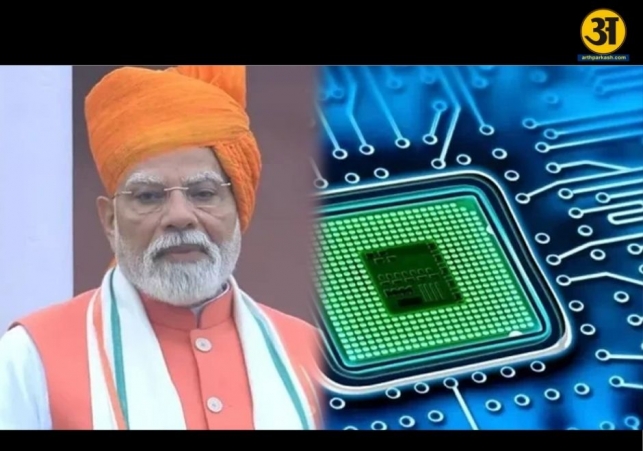
PM Modi unveils India’s first homegrown semiconductor chip VIKRAM3201
Prime Minister Narendra Modi inaugurated the Semicon India 2025 conclave in New Delhi today, marking an important step in India’s journey toward building its own semiconductor ecosystem. The three-day event is focused on creating a robust, resilient, and sustainable semiconductor industry in the country.
During the opening ceremony, Union IT Minister Ashwini Vaishnaw presented the first-ever ‘Made-in-India’ microprocessor to PM Modi. The processor, named VIKRAM3201, has been developed by the Indian Space Research Organisation (ISRO) in collaboration with the Semiconductor Laboratory (SCL), Chandigarh.
This marks a historic achievement, as VIKRAM3201 is the first fully indigenous 32-bit microprocessor designed and manufactured in India. It represents a giant leap toward technological self-reliance, especially in the critical sector of semiconductors, which play a vital role in everything from smartphones to satellites.
All you need to know about VIKRAM3201
VIKRAM3201 has been specially designed to withstand the harsh environmental conditions of launch vehicles and space missions. The chip was fabricated at the 180nm CMOS semiconductor fab at SCL and is an advanced version of ISRO’s earlier processor, VIKRAM1601.
The VIKRAM1601, a 16-bit processor, has been in use since 2009 in the avionics systems of ISRO’s launch vehicles. With the VIKRAM3201, India now has a much more powerful and reliable processor that can handle larger memory and execute complex instructions. This makes it ideal for managing the demanding tasks of launching satellites and space vehicles.
According to ISRO, this new chip can significantly improve the performance and efficiency of launch vehicles, as it reduces dependence on imported components. It also highlights India’s capability to design, develop, and manufacture advanced semiconductors domestically.
The name “VIKRAM” pays tribute to Dr. Vikram Sarabhai, the father of India’s space programme, reflecting the chip’s connection to India’s space research journey.
Government plans for the next phase of the semiconductor mission
Speaking at the event, PM Modi said that semiconductors are not just about technology but also about economic strength, national security, and digital independence. He emphasised that the foundation of digital infrastructure lies in critical minerals, which are essential for semiconductor production.
To meet the growing global and domestic demand for rare earth elements, India has started working on a Critical Minerals Mission. The mission aims to ensure that the country can secure the minerals needed to build its own supply chain for semiconductors.
PM Modi also announced that the government is preparing to move into the next phase of the India Semiconductor Mission. The mission, launched earlier, was designed to support semiconductor design, manufacturing, and research in India. The new phase will bring more investments, policies, and support for advanced technologies like artificial intelligence, chip packaging, and research-driven innovation.
Highlights of Semicon India 2025
The Semicon India 2025 conclave will run for three days and host several sessions on key areas of semiconductor development. Some of the major focus points include:
-
Progress made under the India Semiconductor Mission
-
Plans for semiconductor fabs and advanced chip packaging projects
-
Infrastructure readiness for semiconductor manufacturing
-
Role of smart manufacturing and artificial intelligence in chip design
-
Innovations in research and development
-
Investment opportunities in India’s semiconductor sector
-
Implementation of state-level policies to encourage chip production
The event will also highlight the government’s Design Linked Incentive (DLI) scheme, which supports startups and companies working on semiconductor design. It will showcase India’s growing startup ecosystem, opportunities for international partnerships, and a roadmap for the future of the industry.
Industry leaders, global investors, researchers, and policymakers are expected to attend the conclave, making it an important platform for shaping India’s semiconductor future.
A big step toward self-reliance
The launch of VIKRAM3201 is being seen as a milestone for India’s “Atmanirbhar Bharat” mission. Until now, India has relied heavily on foreign-made chips for space programmes and other advanced technologies. With this development, India moves closer to achieving self-reliance in one of the world’s most critical sectors.
Experts believe that this achievement will not only boost ISRO’s space missions but also inspire confidence in India’s ability to design and manufacture high-end technology. It could open doors for more research collaborations, attract foreign investments, and encourage young engineers and innovators to work in semiconductor development.
By developing its own processors, India reduces its dependence on global supply chains, which have often faced disruptions in recent years. This strengthens the country’s position in the global semiconductor race and helps secure its technological future.
ALSO READ: Comparing losses in gaming and investing sparks debate on regulation
Conclusion
The unveiling of VIKRAM3201 at the Semicon India 2025 conclave is more than just a technological success—it represents India’s determination to build its own semiconductor ecosystem. With the government’s focus on critical minerals, research-driven innovation, and international cooperation, the country is aiming to become a major player in the global chip industry.
For ISRO, this microprocessor will play a vital role in future space missions, improving reliability and performance. For India, it signals a future where the nation is not just a consumer but also a producer of cutting-edge semiconductor technology.
Related News